
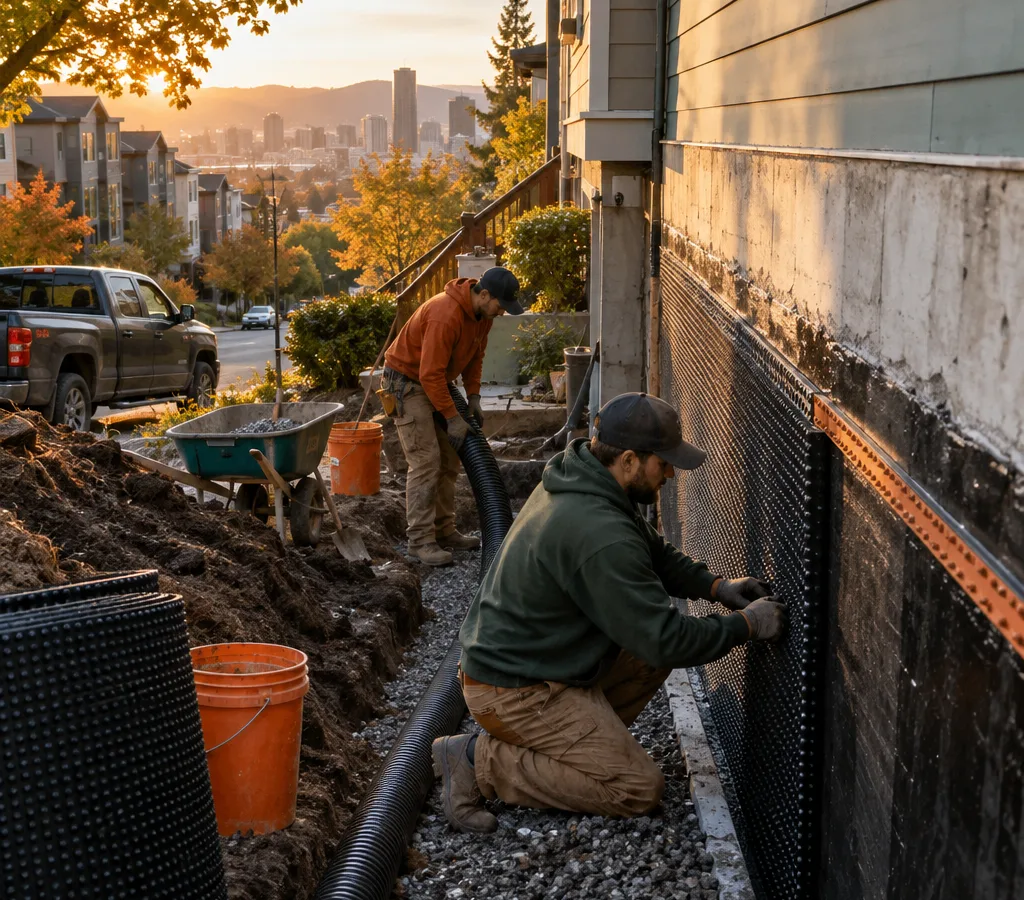
Wet basements, seeping walls
Foundation Waterproofing Portland OR
Water on the basement floor after every storm? Get it drained away from the walls so it stays dry all winter.
Keeping water out
Basement Waterproofing Through the Rainy Season
Basement waterproofing is about getting water away from the walls and out of the house before it can push through cracks and joints. Portland basement waterproofing usually means some mix of better drainage outside, a drain and sump inside, and sealing the spots where water already gets in.
Local rules shape the outside work. City guidance says disconnected downspouts should drain at least 6 feet from a basement and at least 2 feet from a crawl space or slab, so a gutter dumping right beside the wall is often the first thing to fix, and the foundation contractors in Portland, Oregon see it every winter.
Most water in basement solutions work by fixing the source, which keeps the problem from coming back; covering a wet wall with paint alone usually doesn't.
Leak sources
Where the Water Gets In
The usual entry points are the joint where the floor meets the wall, wall cracks, pipe holes, window wells and old block cores that fill with water.
Nearly 90% of the year's rain falls between mid-October and mid-May, and the airport in Portland, OR averages roughly 35 to 37 inches a year, so a basement that's dry in August can still seep every January.
Note where and when water shows up, such as after heavy rain, along one wall or near a downspout. That pattern points the contractor to the source.
Drainage options
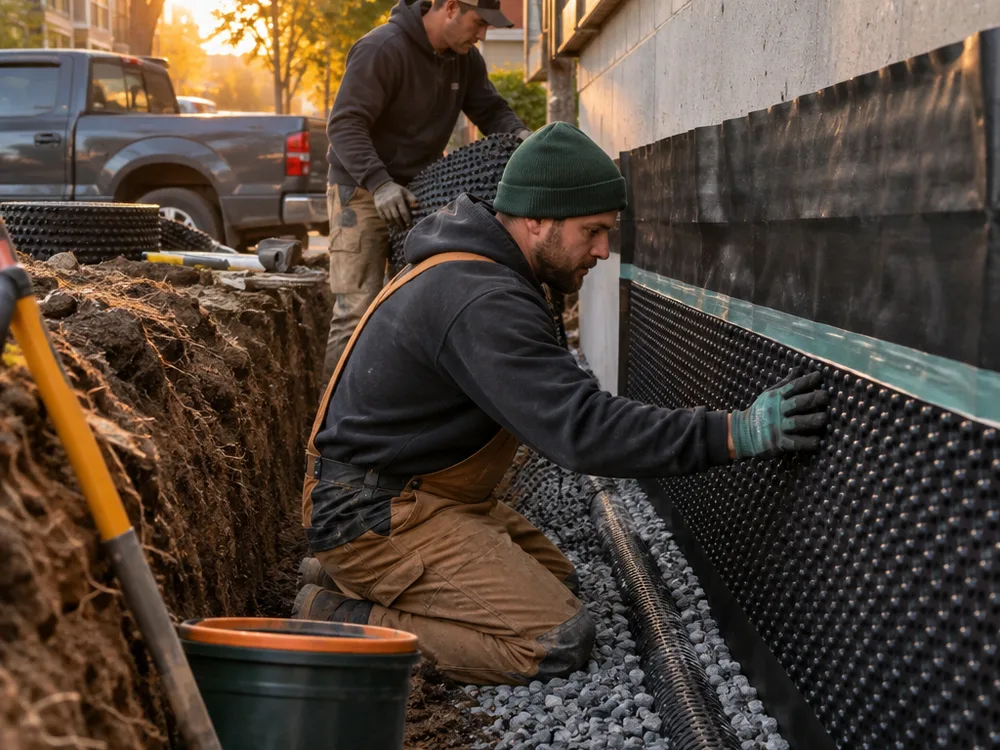
French Drain System Options Inside and Out
Interior Drain Tile
An interior basement drainage system starts with a trench cut along the inside edge of the floor; perforated pipe is laid in gravel, and the water runs to a sump.
Exterior Drain and Membrane
Digging outside exposes the wall so it can be sealed with a membrane and a new drain set at the footing.
Yard Drains
A French drain system across the yard catches water running toward the house before it reaches the wall.
Crack and Joint Sealing
Basement sealing for leaking cracks uses injected urethane; the floor-to-wall joint is handled by the drain rather than caulk.
Window Wells
Wells get drains and covers so they stop filling and leaking through the window frame.
Moisture Barrier for Basement Walls
Basement vapor barriers and plastic wall panels steer seepage down into the drain and keep finished walls dry.
Pumps and power
Sump Pump Installation for Low Spots and High Water
A sump pump installation gives the drain somewhere to go: a lined pit at the low point of the floor, a pump, and a discharge line that carries water well away from the house.
Battery backup is worth asking about, since storms and power cuts tend to arrive together. Where the discharge ends up matters too, because city drainage rules apply to where it goes.
Typical sequence
How a Dry-Out Job Is Done
-
Step01
Find the Pattern
The contractor looks at stains, efflorescence and where water collects after rain.
-
Step02
Check the Outside
Gutters, downspouts, grading and window wells are looked at for easy fixes.
-
Step03
Choose the System
Interior drain and sump, exterior membrane, or a mix, depending on access and budget.
-
Step04
Install
Trenching, pipe and gravel, the sump and the discharge line go in, and the floor is patched.
Inside or outside
Inside Drains Versus Digging Out
Interior systems cost less and avoid digging up landscaping, but they manage water rather than keep it off the wall. Many waterproofing companies offer both, so ask each one why they chose the approach they did.
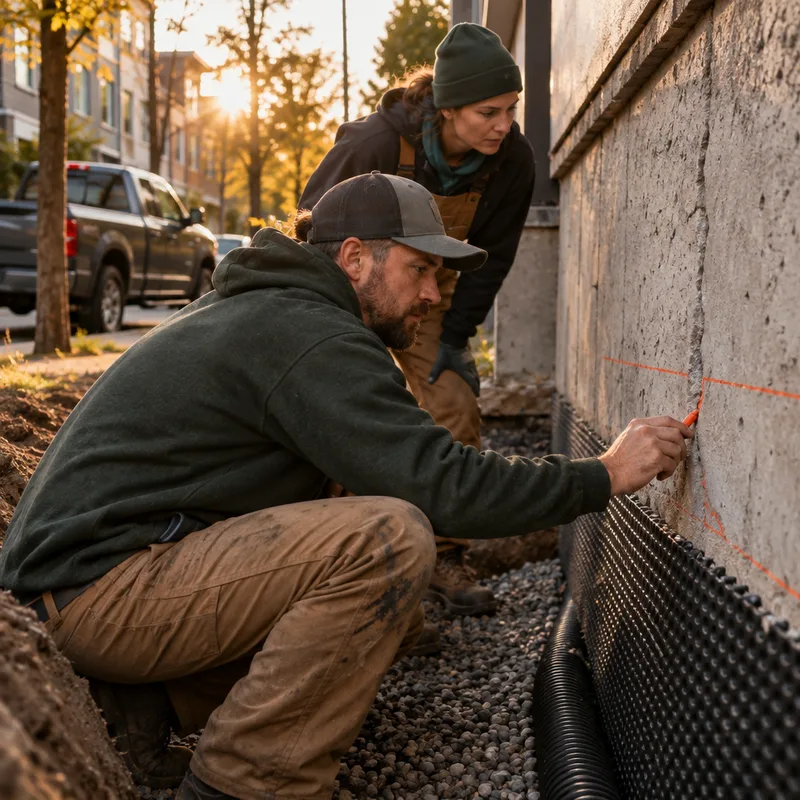
Exterior foundation waterproofing seals the wall itself and is often chosen for new additions or when a wall is being repaired anyway. Tight lots and porches can make it hard to reach every side.
Budget range
What Does Keeping Water Out Cost?
Basement waterproofing typically costs about $2,100 to $6,700.
Exterior digging, a sump with battery backup and finished walls push the price up. These are typical local ranges, not quotes.
Wet-season questions
Questions About Seepage
Will sealing paint stop a wet basement?
Rarely for long. Coatings can slow dampness, but water under pressure finds the joints and cracks, so the lasting way to fix wet basement walls is to add drainage.
Do I need a sump pump for basement waterproofing?
Usually, yes, with an interior drain. The pump gives collected water a way out of the house.
Where should downspouts drain?
City guidance says disconnected downspouts should drain at least 6 feet from a basement and at least 2 feet from a crawl space or slab.
Is a damp basement a foundation problem?
Not always. Wet basement repair is often about drainage alone, since seepage can happen in a sound wall, but cracks that widen or a wall pushing inward point to movement and need a repair as well.
What does basement waterproofing usually cost?
Basement waterproofing typically costs about $2,100 to $6,700.
Can waterproofing be done in winter?
Interior drains can be installed any time; exterior digging is easier once the ground dries out.
Water on the Floor Again? Call Now
Get the water routed away from the walls so the basement stays usable all winter.