
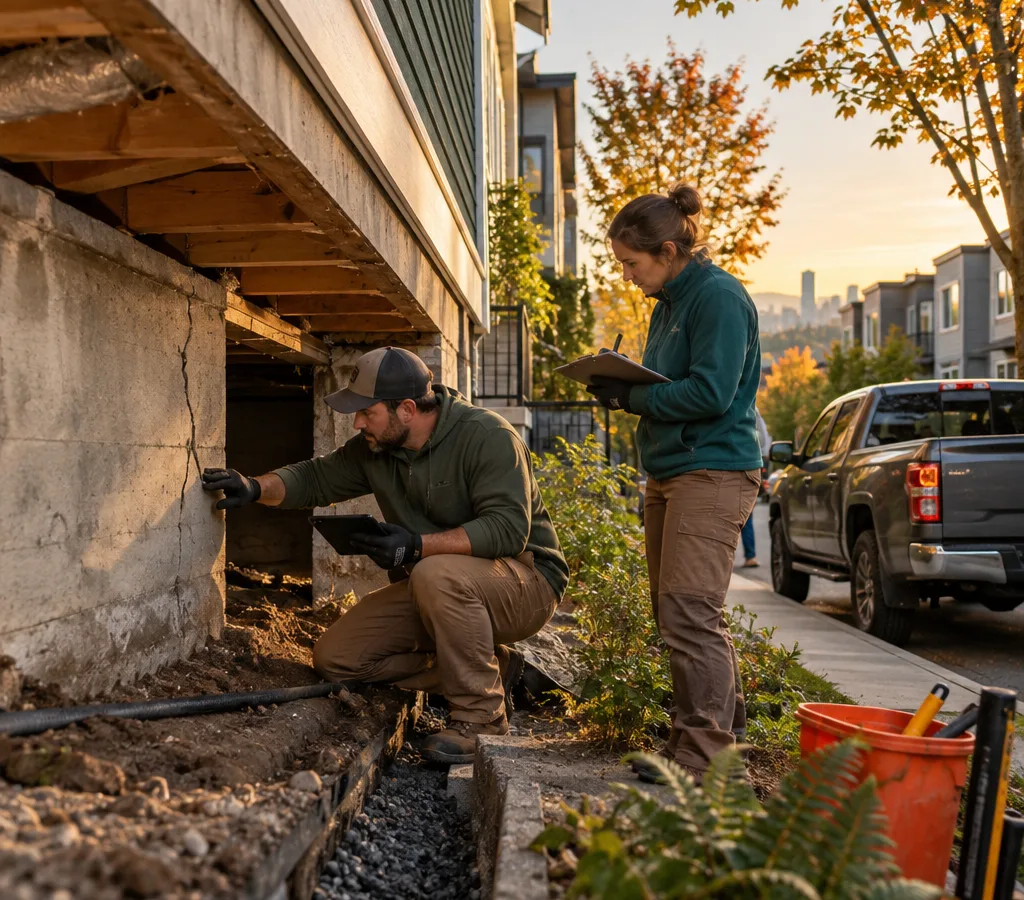
Settling and cracked walls
Portland Oregon Foundation Repair
A corner sinking or a crack getting longer? Find the cause and fix it once, so the floors stop shifting.
Fix the cause, not the crack
Foundation Repair That Starts With the Cause
Most settling has a reason you can find: water pouring off a roof corner, a footing on soft fill, a leaking pipe or old supports giving out. Home foundation repair works best when that cause is handled at the same time as the damage, otherwise the crack you seal today reopens next winter.
Age plays a part. About 27% of the city's homes were built before 1940, so Portland foundation repair often involves early concrete, brick piers or wood posts sitting on dirt, and the repair has to match what is already there. Foundation Contractors Portland covers houses of every age, from early bungalows to newer infill.
Expect a contractor to look at the outside walls, the basement or crawl space and the rooms that show problems before recommending piers, wall work or drainage.
Warning signs
What Makes a House Settle
Stair-step cracks in brick or block, doors that stick in one season and close easily the next, gaps opening at trim, and floors that slope toward one corner are all signs that part of the house has moved.
In Portland, OR, the west-side hills are covered in wind-blown silt rated highly prone to landslides where slopes are steep, and saturated ground there can creep. Downhill corners and retaining walls on those lots deserve an early look.
Sudden changes, a wall leaning in or a crack you can fit a coin into are reasons to call soon rather than wait for spring.
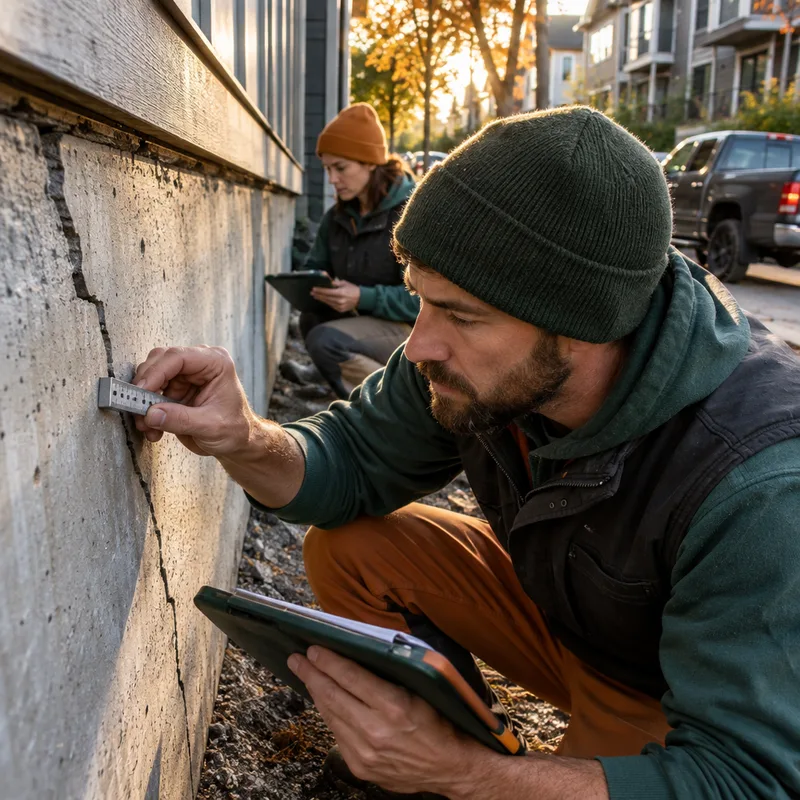
Common fixes
Foundation Piers: Steel, Helical and Concrete
Steel Push Piers
Push piers are driven beside the footing to firm soil using the weight of the house, then brackets transfer the load onto them.
Helical Piers
Helical piers screw into the ground like large augers. They work for lighter loads, porches and spots where push piers can't reach load.
Concrete Piers and Pads
Under a crawl space, new concrete pads and posts replace crushed shims and posts set on bare dirt.
Wall Bracing
Bowing basement walls are held with steel beams, anchors or carbon-fiber straps, or rebuilt when they're too far gone.
Drainage Corrections
Downspout extensions, regrading and drain tile cut the water that softens the soil in the first place. Foundation leak repair often starts here too.
Lifting and Leveling
Once piers are in, a house can sometimes be lifted back toward level, though not every crack closes fully.
How it usually goes
From First Call to Backfill
- Step01
Tell the Contractor What Changed
When the cracks appeared, which doors stick, and whether it got worse after rain.
- Step02
Walk-Through Inside and Out
Floors, walls, the basement or crawl space, gutters and grading are checked.
- Step03
Options and a Bid
You hear the likely cause and the choices, such as piers, bracing, drainage or replacement.
- Step04
Permit Check
Structural repairs often need a permit, and the contractor can find out what yours needs.
- Step05
Install and Backfill
Crews dig, set the piers or braces, and backfill the excavation.
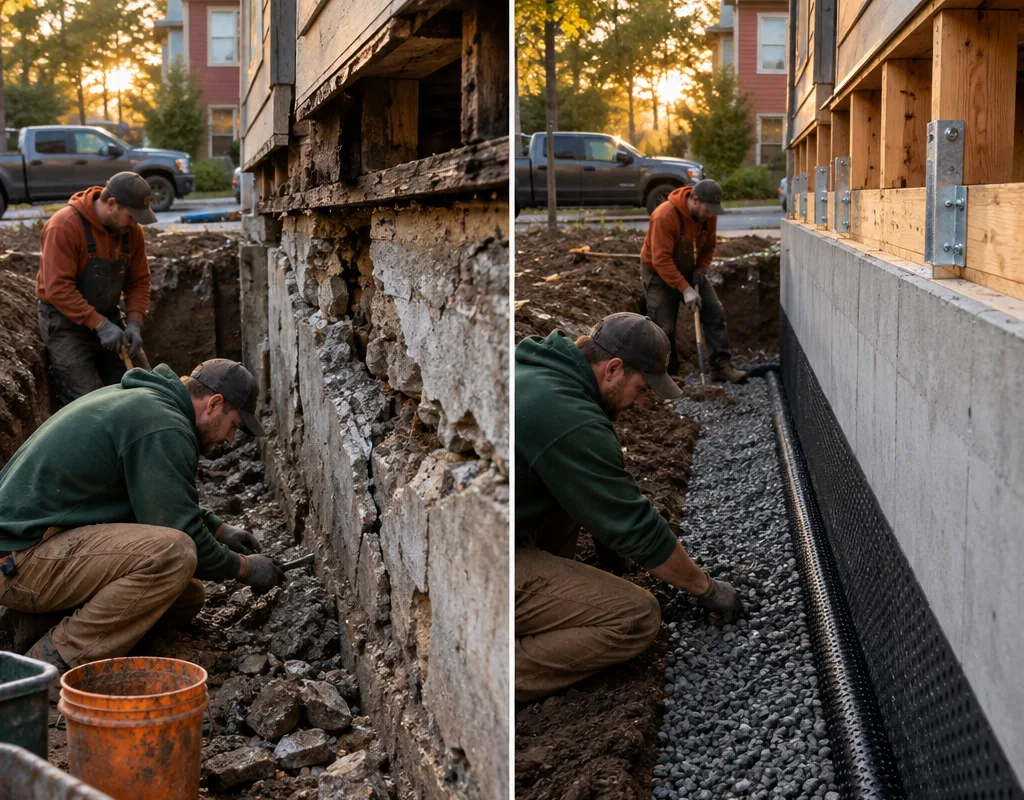
Bigger decisions
Fix It or Replace It?
Repair makes sense when the damage is limited to a corner, a wall or a group of posts and the rest of the concrete is sound. Push piers or helical piers foundation repair can stabilize that section without rebuilding everything.
Replacement comes up when old concrete is crumbling throughout, a wall has failed, or a house sits on posts and dirt with no real footing. The house is lifted and supported while a new foundation is poured below it. Lifting a house and pouring a new foundation typically costs about $30,000 to $100,000.
Older homes sometimes need a mix: piers at one corner, new posts in the crawl space and a section of wall rebuilt.
Comparing bids
What to Compare Between Contractors
Line up every bid for foundation repair. Portland, Oregon homeowners get the clearest comparison by checking what each one actually includes: how many piers and where, how far down they go, whether the house will be lifted, what happens with drainage, and whether a permit is included.
Ask each contractor for the license number and check it with the Oregon Construction Contractors Board, and ask for the quote in writing so you can compare them side by side.
What it runs
Cost of Fixing a Foundation in Portland
Most foundation repairs typically cost about $2,000 to $7,000, and major structural work with many piers or wall rebuilding often runs $12,500 to $28,000 or more.
The number of piers, how deep firm soil is, access around the house and whether a permit is needed move the price. These are typical local ranges, not quotes.
Before you call
Answers Before the First Visit
Can a settled house be lifted back to level?
Sometimes. Piers can lift a settled section back toward level, but older houses may only be stabilized where they are, because forcing them flat can crack plaster and stick doors.
Are push piers or helical piers better?
It depends on the load and the soil. Push piers use the weight of the house and suit heavy walls; helical piers suit lighter loads and porches.
Do piers and wall repairs need a permit?
Often, yes. Structural repairs and replacements commonly need a permit from Portland Permitting & Development, and the contractor can check yours.
Will repairing the foundation fix every crack inside?
No. Stabilizing the foundation stops further movement, but cracks in plaster and drywall usually need separate patching afterward.
Why did an old crack reopen after patching?
Usually because the soil under that part of the house is still moving, often from water. Patching closes the gap; piers or drainage stop the movement.
Do I need a structural engineer before piers go in?
Not always. An engineer is worth bringing in for major movement, a failing wall, a hillside lot or when a lender or permit asks for one.
Corner Dropping? Stop It Before Winter
A settled corner rarely stops on its own. Find out what it would take to stop the movement for good.