
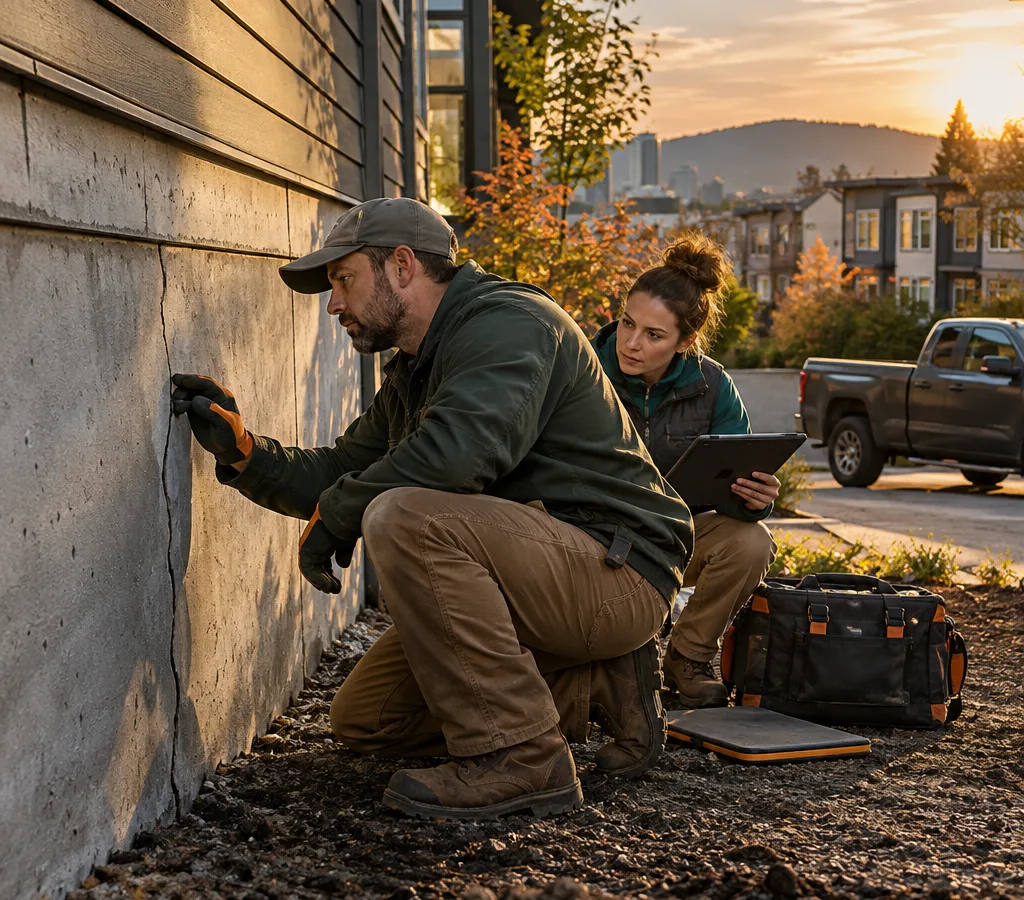
Cracked floors and walls
Concrete Foundation Repair Portland
Cracks in the basement floor or walls letting water in? Seal or brace them so they stop leaking and spreading.
Which ones matter
Basement Floor Crack Repair: Which Cracks Matter
A basement floor crack is usually the slab shrinking as it cured, and the same goes for most cracks in foundation floor slabs, and on its own it's not structural. Basement floor crack repair still makes sense when the crack leaks, trips you up, or one side has risen above the other.
Basement cracks in the walls are different. Vertical cracks are common and often only leak; horizontal cracks, stair-step cracks in block and walls bowing inward mean soil pressure is pushing on the wall.
A Portland foundation contractor can tell the two apart and recommend sealing, injection or bracing for foundation crack repair.
Reading cracks
Reading the Pattern
Hairline cracks in basement floor slabs are common and stable. A basement concrete crack that leaks usually means water pressure under the slab, which points to drainage as much as sealing.
In Portland, OR, nearly 90% of the year's rain falls between mid-October and mid-May, so a crack that's dry in summer can run with water in winter. Note when it leaks before anyone patches it.
Repair methods
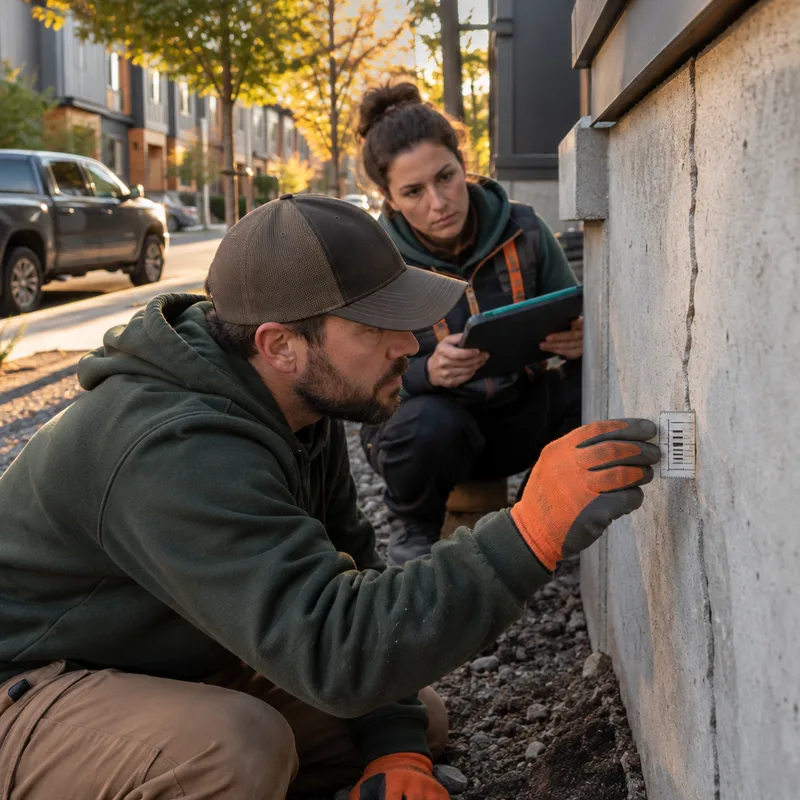
Sealing Cracks in Basement Floor Slabs
Urethane Injection
Flexible urethane is injected into a leaking crack, expands and seals it from the inside face to the soil side.
Epoxy Injection
Epoxy bonds a dry crack back together where strength matters, after the cause of the cracking has been handled.
Routing and Flexible Sealant
Floor cracks are routed out and filled with a flexible sealant so they move without reopening.
Leveling a Lifted Slab
A section that has heaved or dropped can be ground, mud-jacked or patched so it no longer trips.
Drainage Under the Slab
Where water pushes up through the floor, an interior drain and sump relieve the pressure.
Surface Restoration
Spalled or flaking concrete is cleaned back to sound material and patched.
How it's done
How the Job Is Done
-
Step01
Look at the Pattern
Width, direction, displacement and whether it leaks after rain.
-
Step02
Find the Cause
Soil pressure, settling, shrinkage or water under the slab.
-
Step03
Pick the Method
Sealing, injection, bracing or drainage, or more than one together.
-
Step04
Seal or Brace
Ports are set and injected, or anchors and braces are installed.
When walls move
Foundation Wall Repair for Bowing and Leaking Walls
Foundation wall repair is needed when a wall has a horizontal crack, has bowed inward or has shifted at the bottom. Steel beams, wall anchors or carbon-fiber straps hold it, and badly bowed walls are dug out and rebuilt.
Structural wall repairs in Portland, Oregon often need a permit, and the contractor can check what yours needs.
Patch or repair
Injection, Patching or Bracing?
Patching from the inside with hydraulic cement can stop a drip for a while but tends to pop out. Injection fills the full depth, which is why it is the usual way to fix foundation crack leaks for good.
If the crack is caused by movement, sealing alone won't hold; the movement has to be stopped first with bracing, piers or drainage.
Price check
How Much Does Sealing or Bracing Cost?
Sealing a single foundation crack typically costs about $250 to $800.
Wall bracing and anchors cost more and depend on the wall length; most foundation repairs typically cost about $2,000 to $7,000. These are typical ranges, not quotes.
Crack questions
Questions Before You Patch
Is a crack in the basement floor serious?
Usually not. Floor cracks from shrinkage are common; ones that leak, widen or have one side raised are worth having looked at.
Can I seal a foundation crack myself?
Small dry cracks can be filled with a kit, but leaking or widening cracks need injection and a look at the cause.
What does sealing a foundation crack cost?
Sealing a single foundation crack typically costs about $250 to $800.
Why does a sealed crack reopen?
Because the wall or slab is still moving. Sealing closes the gap; stopping the movement needs bracing, piers or drainage.
Are horizontal wall cracks worse than vertical ones?
Usually, yes. Horizontal cracks often mean soil is pushing the wall inward and the wall needs bracing.
Water Seeping Through? Seal It Properly
Seal it properly once instead of patching the same crack every winter.